ANATOMY OF PRESENCE
Vivian Caccuri, Lucia Koch, and Henrique Oliveira
- –
SCHAUWERK Sindelfingen presents monumental sculptures and installations by three internationally renowned Brazilian artists: Vivian Caccuri, Lucia Koch, and Henrique Oliveira.
For the exhibition ANATOMY OF PRESENCE, large-format works were newly conceived especially for the SCHAUWERK Sindelfingen, transforming the museum with accessible organic structures, impressive soundscapes, and immersive light installations.
The three artists engage in a direct dialogue with the human body to transform the SCHAUWERK into a vibrant landscape of sensual, individual, and collective experiences. In doing so, they continue a tradition of installation art that has developed as an independent form in Brazil since the 1960s. In an increasingly virtual world, the presentation sets a clear counterpoint by inviting visitors to participate in an exhibition parkour to consciously perceive their own physicality and surroundings.
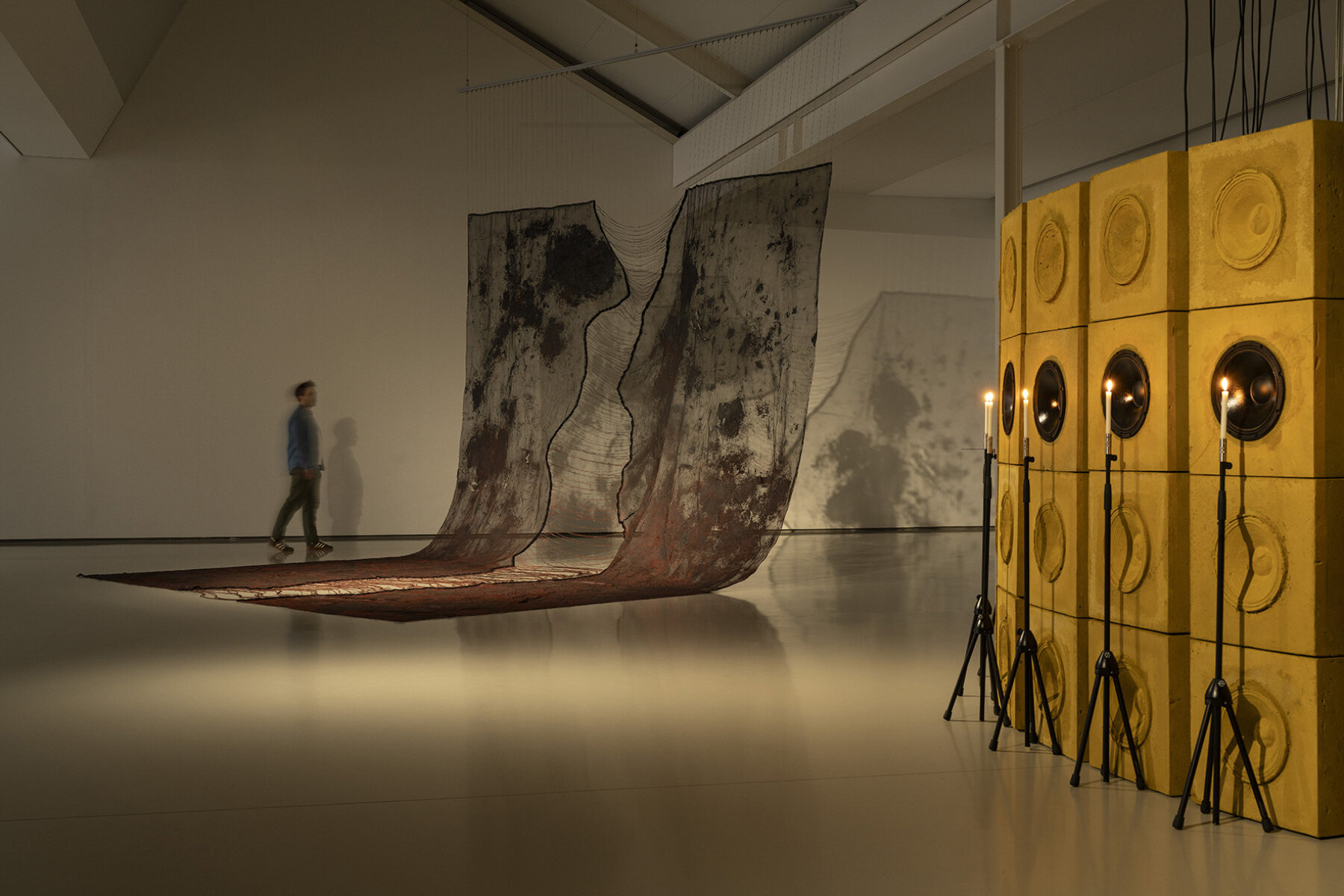
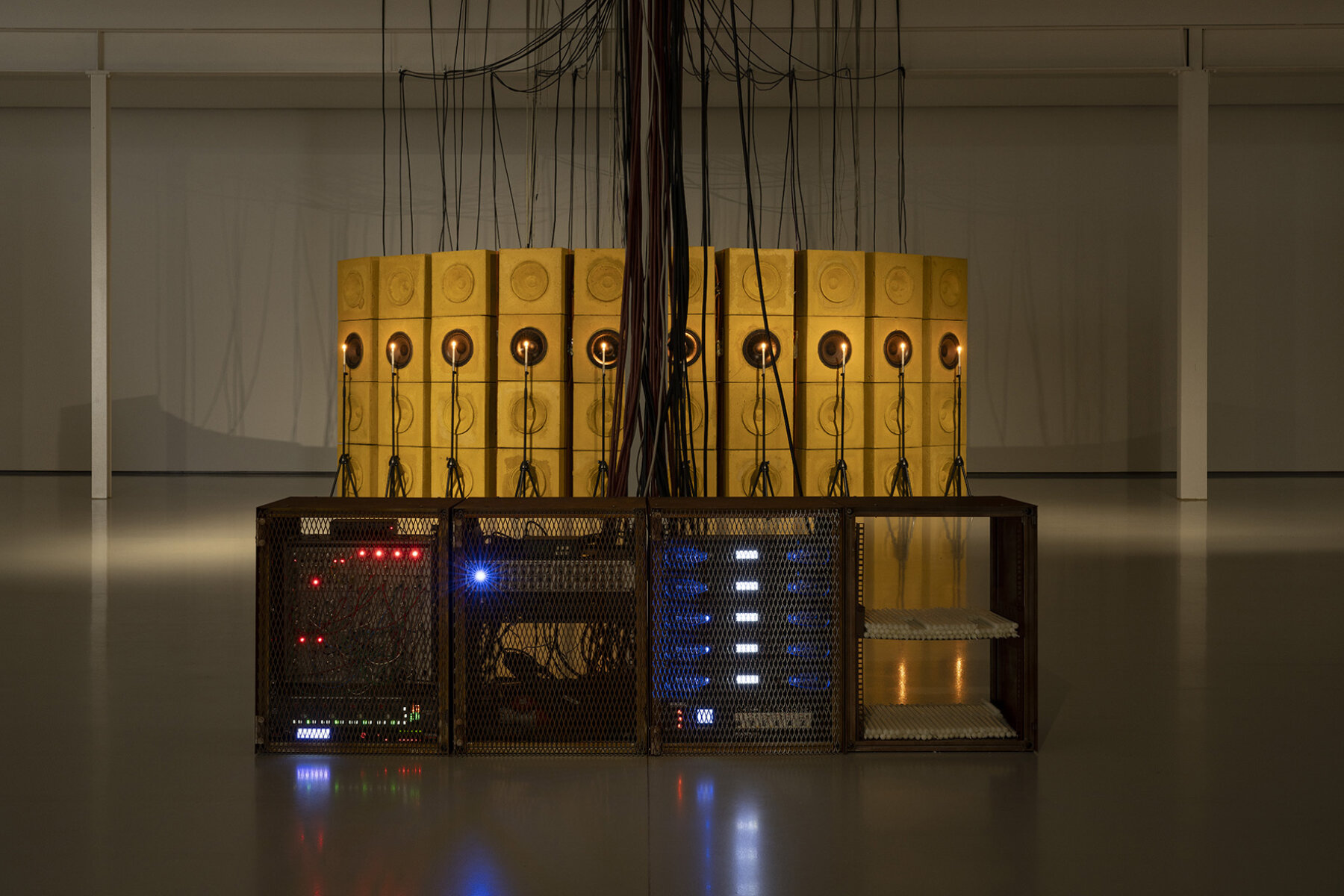
Vivian Caccuri (b. 1986 in São Paulo) has developed the sculptural sound installation Overheated System for SCHAUWERK, inspired by the improvised arrangements of electricity and data cables in Brazilian cities. These cables serve as a metaphor for the inventiveness involved in obtaining electricity, as well as a symbol of social inequalities. Caccuri explores the extent to which perception is shaped by culture whilst also being based on the body’s immediate responses. Low-frequency rhythms emanate from concrete loudspeakers stacked one on top of the other. The sounds of the installation are created directly from the electrical current of the building into a modular synthesizer specially built for the installation. This machine transforms voltage into sound and is able to create rhythm and movement. The rhythms can be physically experienced as vibrations, whilst their sound pressure sets candle flames in front of the loudspeakers in motion. At the same time, Ash Fossil I and II, two embroidered and painted tapestries made from mosquito nets, visually capture the signals from the synthesiser, much like a sonogram. Through the interplay of rhythm, circuits, combustion and perception, an energetic structure emerges that oscillates between control and instability.
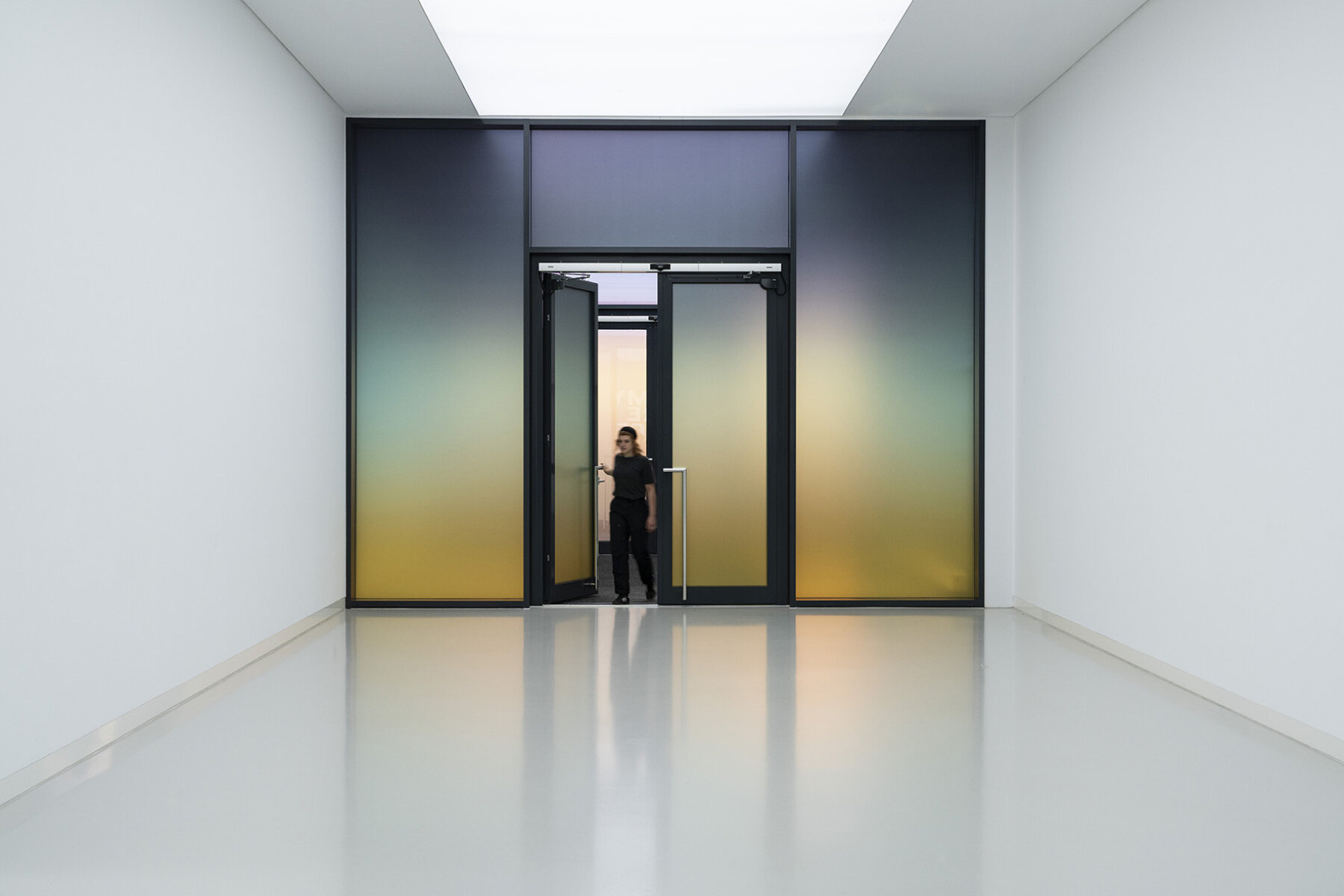
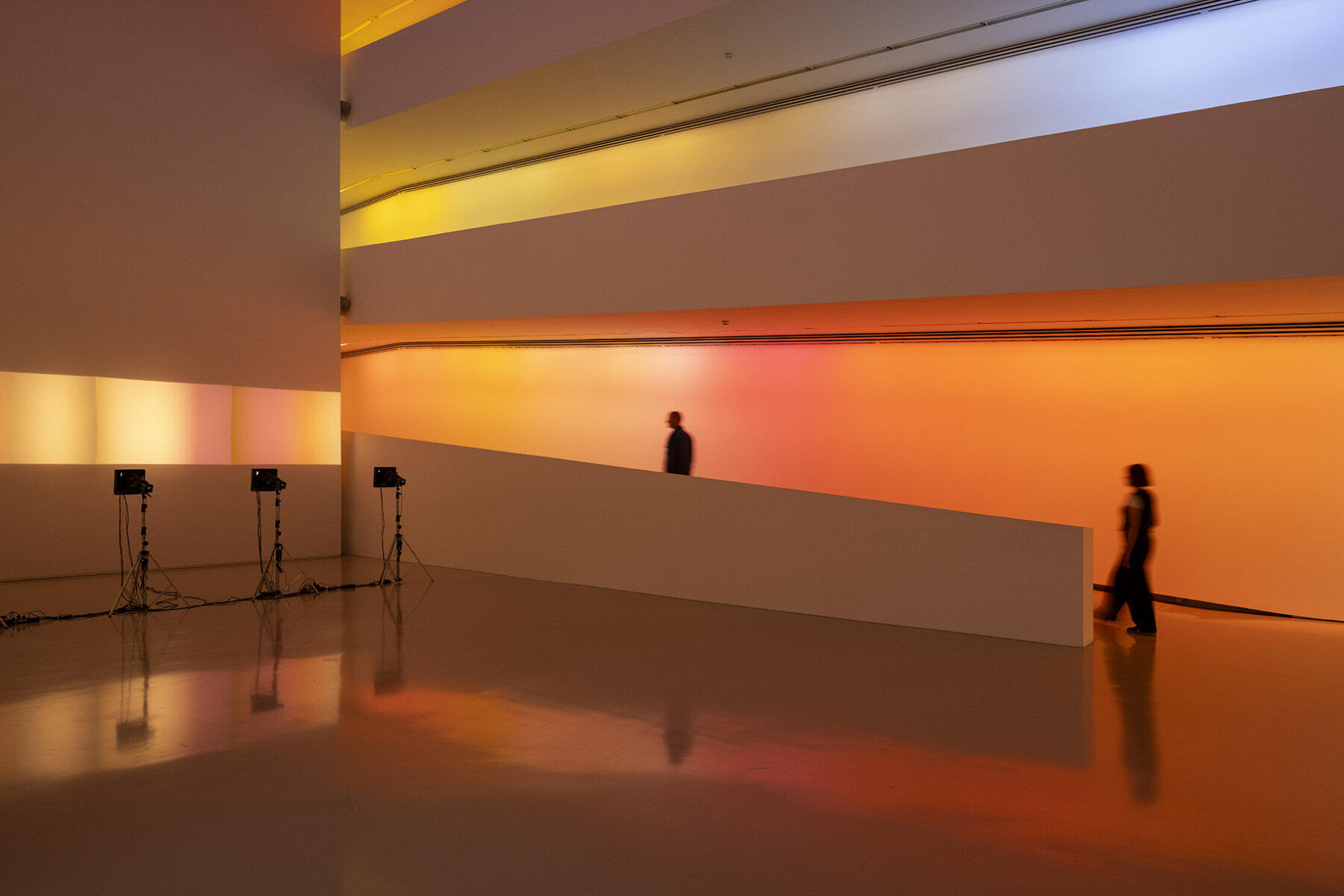
Lucia Koch (b. 1966 in Porto Alegre) explores spatial perception through light, colour and architectural intervention. In the exhibition, she transforms the fifteen-metre-high former high-bay warehouse into an immersive light and colour installation using coloured films and light projections. In Gang of Four (Runners), the projected coloured surfaces appear as moving shadows which, in a choreography developed by the artist, form a continuous colour gradient, constantly transforming the space. Koch makes the fleeting presence of people visible in this ever-changing environment. For Big Loop, she fits the ceiling lights along the encircling staircase with handmade coloured gel sleeves. The resulting sequence of differently coloured lights enables visitors to immerse themselves in the installation and ‘read’ it like a text as they move along the ramps. In this way, the work takes up the idea of a language of colours, a concept that has long fascinated the artist. At the museum’s glazed entrance, Koch has created a colourful transitional space between sunrise and sunset, titled Atmosphere Box. Shifting between dawn and dusk, the space becomes a timeless liminal zone in which one’s own perception becomes obscured.
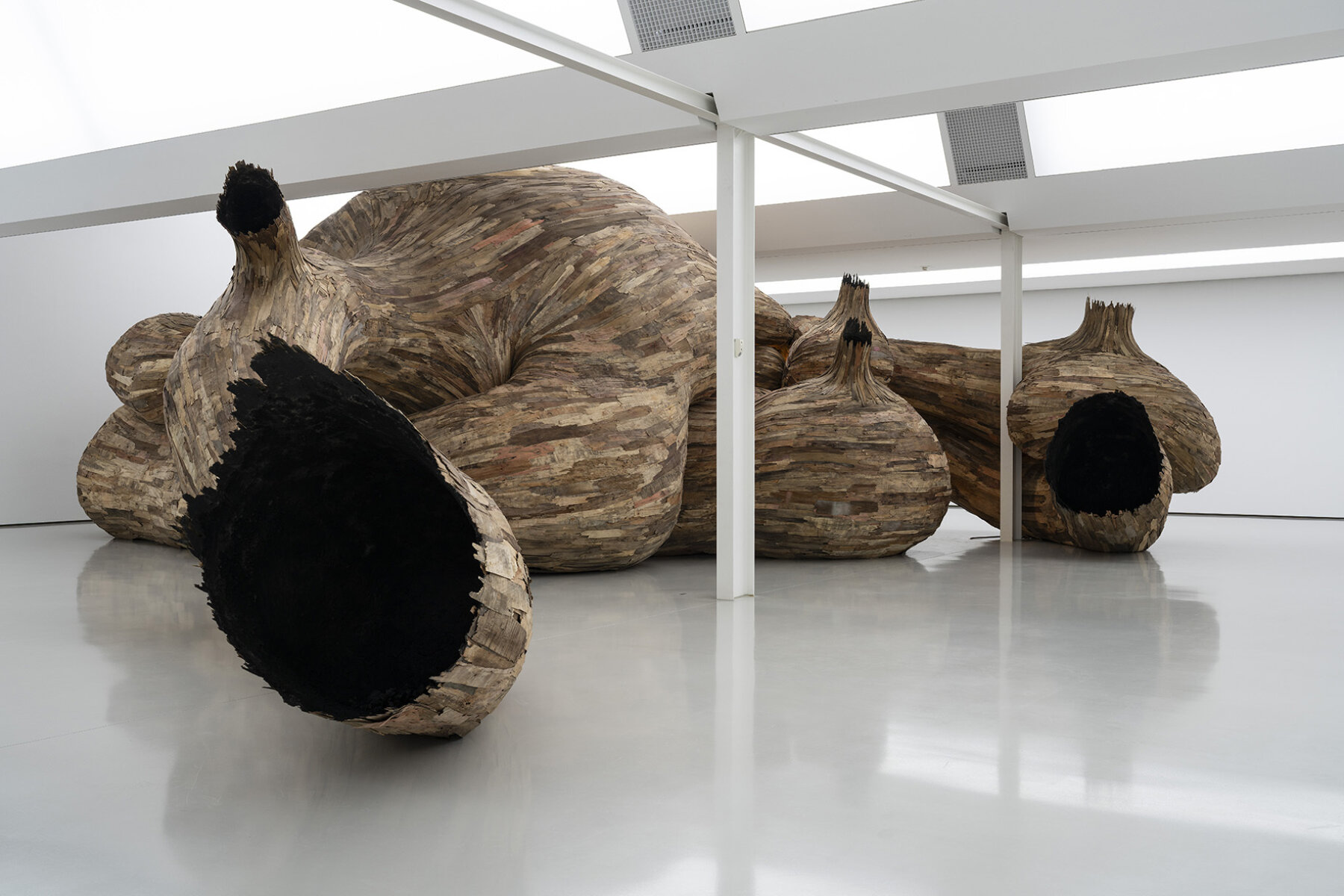
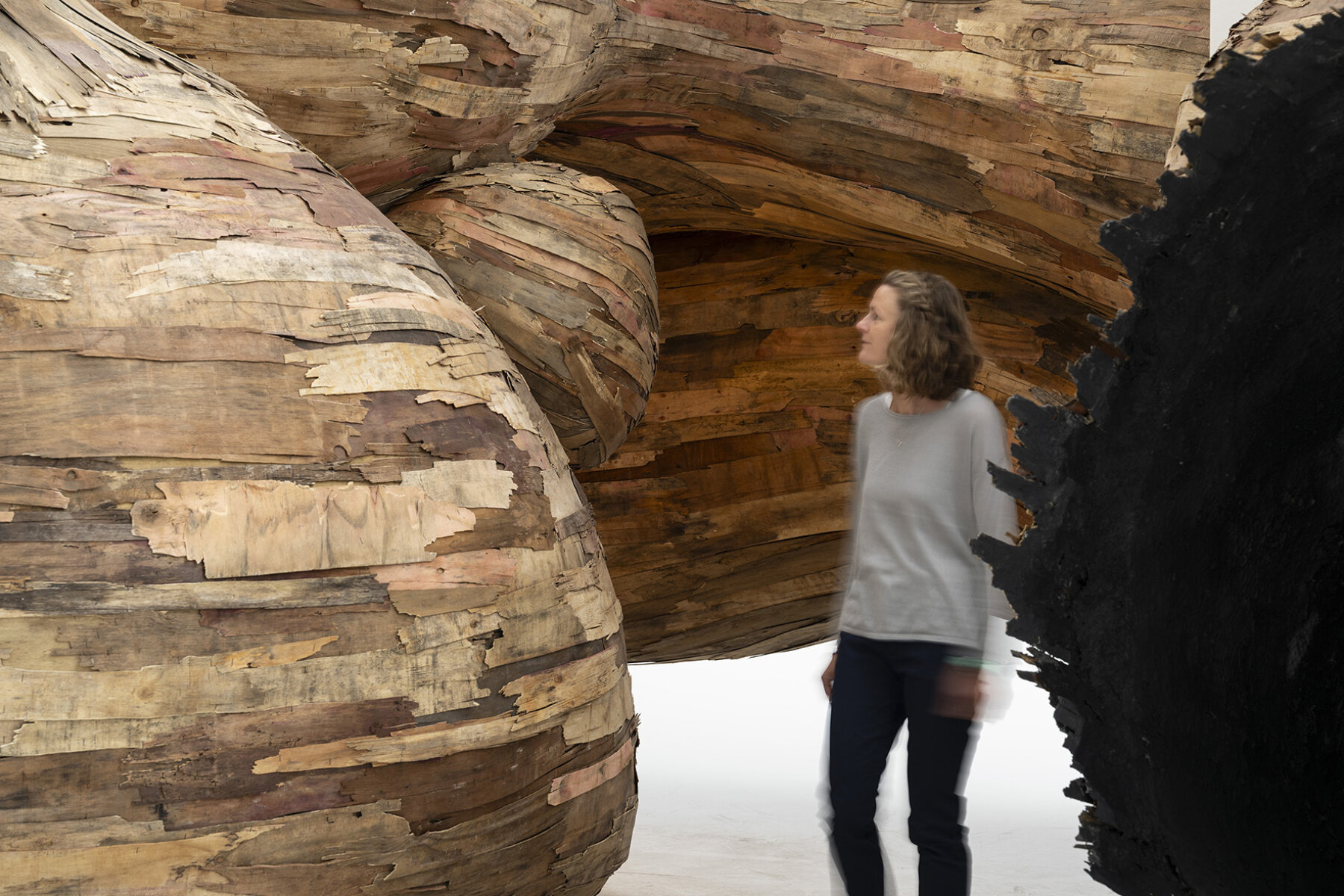
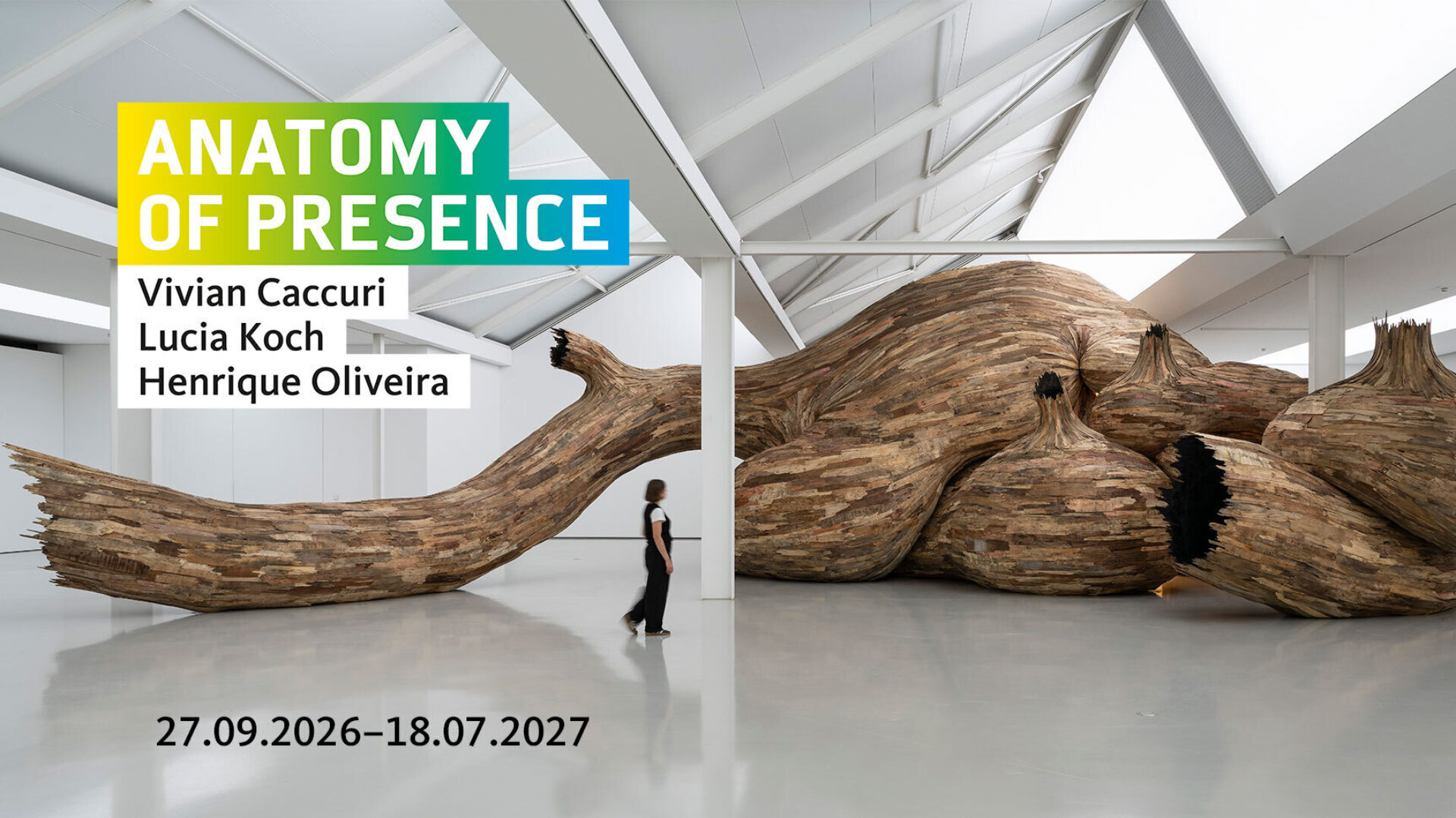
Henrique Oliveira (b. 1973 in Ourinhos, São Paulo) has developed a central installation of architectural scale for the SCHAUWERK. Burned Bridges, Eternal Return spreads out across the museum like an enigmatic, living organism. The swollen, root-like forms grow out of the floor and walls and, with their dominant physical presence, seem almost to burst through the metal framework of the former production hall. In this way, the artist evokes the power of nature, which reclaims its space and cannot be permanently held back by anything. At its centre, the installation encloses a smaller exhibition space in which Oliveira presents another work. Visitors can move through the swollen structure as if inside a cave. For his works, the artist uses plywood and tapumes, materials often found on building sites or in Brazil’s poor neighbourhoods. Oliveira draws on Friedrich Nietzsche’s concept of the ‘eternal recurrence’ – the cyclical understanding of time in which every event, every decision and every experience recurs ceaselessly: trees are transformed into industrial plywood, which is then used on building sites. After being discarded there, it becomes an urban building material, only to be ultimately transformed into a sculpture.
Photo Gallery